Roads, War, Law, and the Making of Alabama
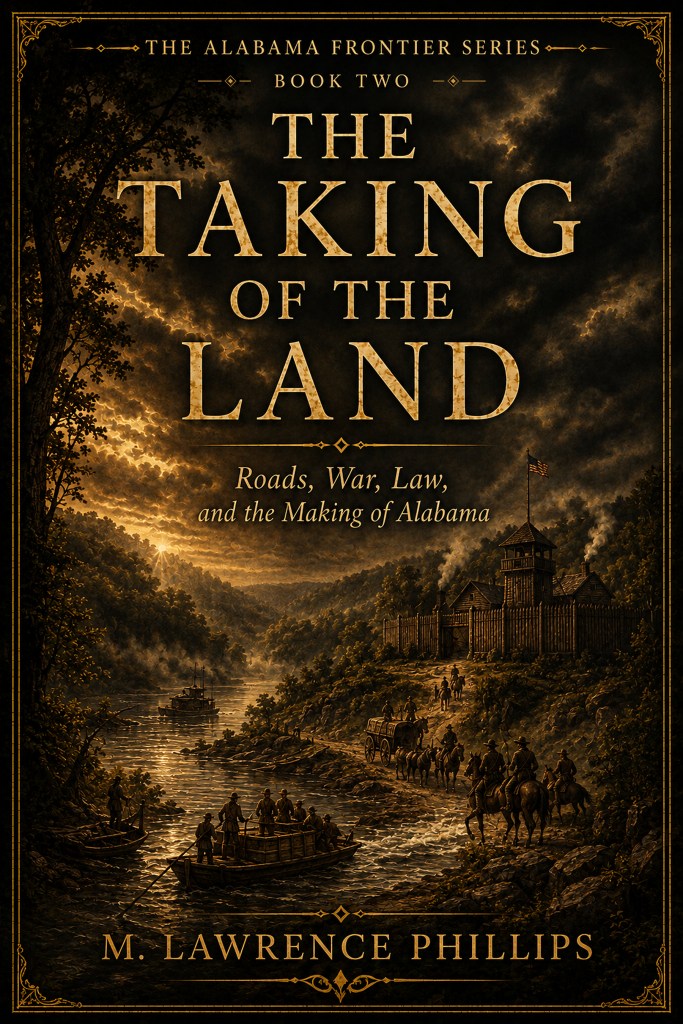
The Taking of the Land begins in the final years of the eighteenth century, when the United States had become a permanent neighbor to the Cherokee and Muscogee peoples of the Southeast—and pressure on Native land was becoming organized policy.
This book follows the roads, treaties, wars, laws, surveys, land sales, military campaigns, and forced migrations that transformed Native homelands into the emerging state of Alabama.
Removal was not one order followed by one march. It was a process. Some Native people resisted with weapons. Others used diplomacy, law, literacy, schools, newspapers, petitions, farming, and political reorganization. Many used more than one strategy over the course of a lifetime.
The story also follows the contradictions of the period: settlers enduring hardship while participating in dispossession, missionaries defending Native rights while trying to change Native life, Native leaders disagreeing over how to survive, and enslaved African Americans laboring on land that had only recently been Indigenous country.
Alabama did not emerge on vacant ground.
The Taking of the Land tells how roads became corridors of expansion, how law turned pressure into policy, how war opened new territory, and how the making of Alabama was inseparable from the taking of Native land.

