Memory, Survival, and the Stories Beneath Our Feet
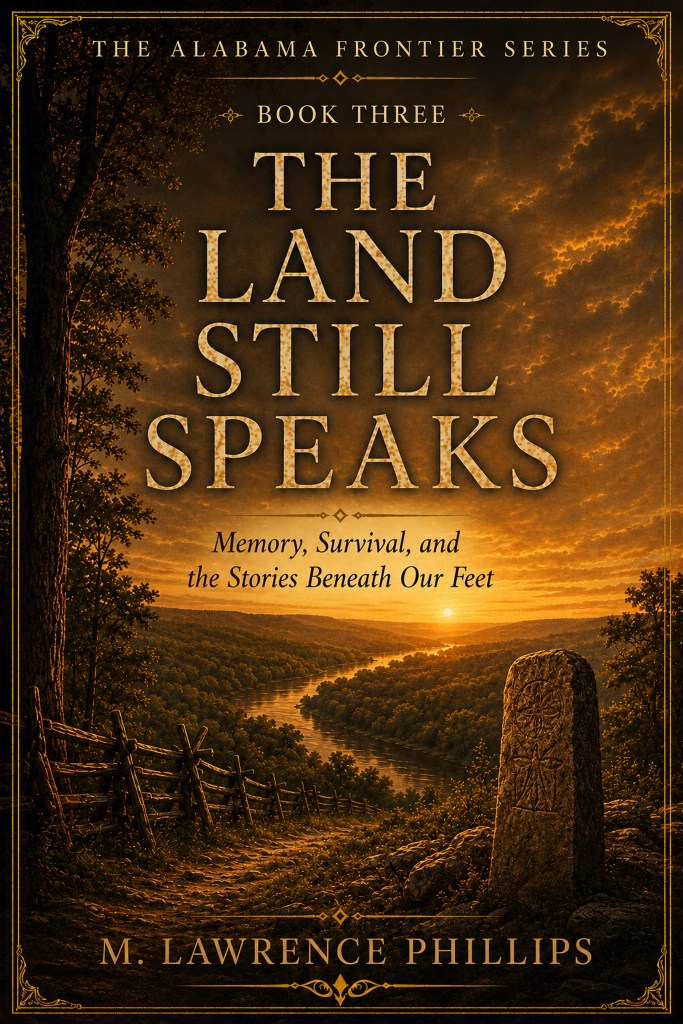
The land remembers long after people, roads, towns, and boundaries change.
The Land Still Speaks explores memory, survivaRemoval changed the map, but it did not erase the people, the memory, or the history beneath the land.
The Land Still Speaks begins after the great removals of the 1830s, when Alabama’s official map had been redrawn with counties, roads, farms, plantations, towns, and courthouses across land that had recently been governed and inhabited by Cherokee and Muscogee communities.
But a map can show who controls the land without showing what happened to the people who lost it. Native communities continued west of the Mississippi and elsewhere in the Southeast. Some Native people remained in Alabama through family ties, legal claims, intermarriage, exemptions, concealment, and other circumstances. Removal was not the end of the story.
This book follows the survival of identity, memory, community, and place after dispossession. It looks at what remained in rivers, roads, town names, family stories, landscapes, political claims, and living Native nations.
The Land Still Speaks is about what history leaves behind—and what becomes visible when we stop treating removal as the final chapter.l, and the stories that remain beneath Alabama’s modern landscape. It is Book Three of the Alabama Frontier Series, carrying the story forward through the people, places, and traces of the past that still shape the state today.

